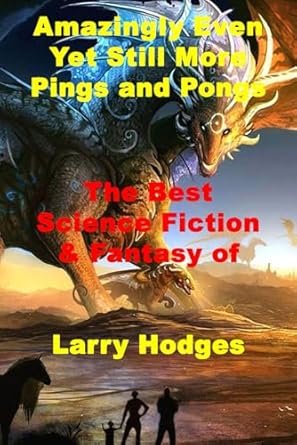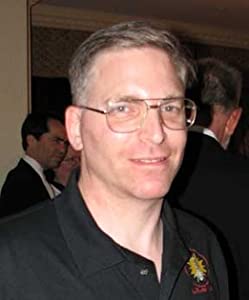
Recently I sold my 250th short story, all in the science fiction & fantasy realm. (I’ve also sold four novels.) That includes 66 “pro” sales, markets that pay at the rate SFWA sets as the pro rate, currently 8 cents/word. The sales include 195 original stories and 55 resales. I haven’t won any Hugos or Nebulas – they’re fixed, I tell ya! 🙂 – but I’m am pretty prolific at writing sellable fiction. So, what is my writing system?
I spend an inordinate amount of time at a nearby Panera’s, generally at least three hours every day. I eat breakfast at home, but most of my lunches and half my dinners are there. I also sip away at Dr Pepper when I’m there. I don’t guzzle it – one cup will last me the entire session. After years of doing this, just a taste of it and my writing brain turns on.
But my “writing” begins before I go to Panera’s. Several times a week I just sit back in my lounge chair, steno notebook in hand, and brainstorm story ideas. Sometimes I’m brainstorming new story ideas; other times I’m brainstorming for a story I already plan to write. I jot down lots of notes, primarily on the plot, characters, and my personal favorite, bits of dialogue. This latter helps me develop the characters, and often sets the high points of the story. I also think about the tone and point of view for the story. I never start writing until I have much of this developed.
To me, there are two creative stages in writing fiction. There’s the “Macro” stage, where I’m brainstorming and outlining, as described above. This is where I work out the plot, main characters, and create a short, loose outline with bullet points. The second part is the “Micro” stage, the actual writing, where I get creative in what the characters do and say, and in describing the characters and settings, and where the macro part might also change.
I’m perhaps an outlier in three areas. First, I don’t know if others do snippets of dialog for the characters in advance as I do. It helps me develop the characters Second, I hate the saying, “Character is king.” To me, Character and Idea are equal in importance. (Of course, sometimes the main idea is something about the character.) In general, the strengths of my writing are ideas, dialog, and humor – and some of that may come from my writing system. Most of my stories are either humorous or satirical, or have a humorous character or aspect. I can’t help myself. If I didn’t use at least some humor, I’d feel like a home run hitter in baseball who chooses to bunt. Third, I don’t think most writers stop every one to three paragraphs or so and go back and make sure they are “perfect.” Most focus on getting the first draft done, then go back and fix it. I prefer to do that as I go along. When I finish a draft, to me it’s already a second or third draft.
Note #17 below, “Get outside critiques.” I put most of my stories up for critique at critters.org. Since I’m a “pro” writer, my stories go up that week. Then I do a few critiques of others, and a week later, I’ll have perhaps 10-20 critiques of my story. The critiquers range a lot in experience, but what they are especially good at is finding problems. Once they are pointed out, I can fix them. They also make a lot of wording suggestions. I also get stories critiqued in other writer groups, such as at the annual “The Never-Ending Odyssey,” where graduates of the annual six-week Odyssey Science Fiction Writing program get together annually and run our own workshop. (I’m Class of 2006.)
Below is my personal writing system for short stories. I’ve been honing my “system” for many years, since my days in the Odyssey Writing Workshop. This isn’t the only way to do it, it’s just the way I do it. Some don’t outline at all, just sit down and somehow they write something sellable. Others outline in great detail. Find what works for you – but the below works for me. (I’ve done this so long that I do each of these steps automatically – I don’t need to see the below.) Enjoy!
- Either from sudden inspiration, brainstorming, or from an ongoing file of story ideas, choose the theme(s) and ideas to use for the story, and expand on them. This should include general ideas as well as themes, character sketches, settings, etc. Do lots of brainstorming, taking notes.
- Develop a flexible plot around these ideas, scene by scene. In particular make sure you know the ending so you can write to that ending.
- Do short character sketches for the major characters, including snippets of dialog.
- Decide where the story should start, the tone, and the point of view, since all are needed before you can start. These are three of the most under-rated aspects of writing.
- Write the story, one paragraph at a time, or sometimes a few paragraphs at a time. Reread and rewrite each paragraph or paragraphs as they are written, making sure they are “perfect” before going on, other than some descriptions that can be added later on.
- At the end of each scene, make sure the scene accomplished what was required.
- Be creative in making changes and additions to anything as the story goes on, always aiming for the planned ending – though that ending can change if you come up with a better one. If a change in the story necessitates a change in the ending, make sure you know what the new ending will be before moving on so you can write toward that new ending.
- Go back and work on the opening, making sure the story started at the right place and has an effective “hook” to really draw the reader into the story.
- Go back and flesh out each scene with any needed descriptions. Each description should add to the story in some way.
- Do a checklist on the following items: Good opening? Vivid, interesting characters? Vivid settings? Authentic and interesting dialogue? Strong plot? Excessive exposition? Unneeded side plots or anything else that can be cut? Satisfying ending? Does the theme come through strongly? The right point of view? Rewrite anything that needs work.
- Do search for problem words, such as passive verbs like “was” and “were,” words that end in “ly,” and other common problem words, such as “of,” “that,” “by,” and “very.” (Each writer should have their own list of problem words. See short book “The 10% Solution” for more on this.)
- Read entire story onscreen several times, making changes along the way.
- Wait at least one week, then read entire story onscreen several times, making changes along the way.
- Print out and proof, paragraph by paragraph. Read dialogue aloud. Do changes directly on the screen, or put in bullet points of things to add or work on.
- Give one final reading, usual from printout.
- Get outside critiques.
- Go through critiques. Make “easy” changes directly on text (such as minor wording changes or typos), and make bullet point list of other needed changes. Then go through them systematically until story seems ready.
- Read and make changes multiple times, first onscreen and then from printout.
- Create market submission plan and start submitting.
- Start next story!